The Beer Thread

The Absurdly Fast World Record Time For Chugging A Liter Of Beer Hasn't Been Beat Since 1977
By A.J. Forget April 28, 2026

The Guinness Book of World Records got its start in the 1950s because of a disagreement over drinks. The managing director of the Guinness brewery found himself arguing over what was the fastest game bird in Europe, and none of the involved parties were able to find an answer in the available reference books. To put an end to such barroom disputes, they put together the first edition of what was then called the "Guinness Book of Records." But, as soon as you start putting down records like that, you invite others to break them. Given that this book itself came from a brewery, it should be no surprise that beer drinking featured heavily, at least at one time.

There are several alcohol and beer-related records that have been a part of the Guinness World Records over the years, but rarely anymore does any record stand for 50 years, as we are quickly approaching this particular feat. Back in June 1977, a man by the name of Steven Petrosino drank an entire liter of beer in just 1.3 seconds at the Gingerbread Man in Carlisle, Pennsylvania.

When it comes to world records, it is often a bit difficult to understand the exact magnitude of an achievement. For anyone who has ever tried to chug even a 16-ounce pint of beer, there is likely some awareness of both how long it took and how much more difficult it would be to more than double that volume to the 33.8 ounces in a liter. But it all comes into perspective when you see that the previous record was 2.3 seconds, or about 77% longer.

Of all the silly challenges out there, beer-chugging is undoubtedly on the more popular side of the spectrum. So, if that one was ever going to be beaten, it likely would have happened by now. But there is another reason that this one might stand: Guinness World Records has stopped monitoring a wide variety of categories over the years to discourage potentially harmful behavior.

Once upon a time, the book featured records like the most wine and beer consumed in an hour, with truly staggering numbers attached to them. The first edition, for example, had the records at 24 pints of beer in 52 minutes and 40 pints of wine in 59 minutes — both of which seem nearly impossible. Then again, Andre the Giant was said to have set a personal record when he consumed 156 beers in a single sitting. But regardless of how extreme these records were, the simple tracking and promotion of them is enough to encourage others to push further into pursuits that are certainly not good for anyone's health or happiness.

To remove itself from the game of encouraging problem behaviors, many of the categories that could be categorized as "gluttonous" — including both food and alcohol-related endeavors — were removed from the Guinness Book of World Records. It's a good thing too, as by the 1970 edition, the record number of pints consumed in an hour had already risen to 36, a 50% increase from the original tally.


Read More: https://www.tastingtable.com/2155994/fastest-liter-beer-chug/
 

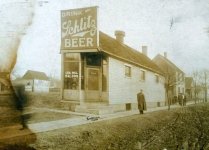
End of an era as Schlitz, the beer that made Milwaukee famous, pours its last​


It’s last call for Schlitz, the beer that made Milwaukee famous.

The Pabst Brewing Co. has confirmed it is ceasing production of the iconic lager that has quenched the thirst of American beer drinkers for 177 years.

“Unfortunately, we have seen continued increases in our costs to store and ship certain products and have had to make the tough choice to place Schlitz Premium on hiatus,” Zac Nadile, Pabst head of brand strategy, said in a statement last month to Milwaukee Magazine.

The demise of a blue-collar beer like Schlitz marks the end of an era.

The Joseph Schlitz Brewing Co. was founded in 1849 by a German immigrant who took over a small Milwaukee brewery after marrying the widow of the original owner, August Krug — and renamed the business after himself.

While “The Beer that Made Milwaukee Famous” soon became the Schlitz slogan, it was actually the Great Chicago fire in 1871 that helped turn the brand into a national name, when word spread that the company had been shipping barrels of beer to aid the devastated Windy City.

By the 1950s, Schlitz was the biggest brewery in the United States, and its new advertising slogan declared: “When you’re out of Schlitz, you’re out of beer.”

Budweiser overtook Schlitz that same decade. Then, in 1976, came what became known as the “Schlitz Mistake” — the company changed its recipe to boost profits and alienated legions of loyal customers in the process.

The following year, Schlitz suffered another self-inflicted wound when it greenlit an advertising drive that came to be known as the “Drink Schlitz or I’ll kill you” campaign featuring menacing tough guys responding with threats when asked it they’d consider switching to another beer.

Meanwhile, Schlitz’s bottom line was buffeted by the rise of light beers and changing American tastes, and the lingering perception that it was an uncool beer of the past.

The beleaguered brand even became the unintended victim of a 1991 skit by “Saturday Night Live” called “Schmitts Gay,” which was actually a parody of the macho beer ads put out by some of Schlitz’s competitors.

Schlitz was sold in 1982 to the Stroh Brewery Co., which stopped brewing the beer in Milwaukee. Then Schlitz was sold to Pabst in 1999, which in recent years had brewed it at an Anheuser-Busch plant in Texas.

One last batch of Schlitz will be brewed on Saturday by the Wisconsin Brewing Co. at its facility outside Madison. And they’ll be using the recipe from 1948 when Schlitz, not Budweiser, was the king of beers.

Schlitz deserves to go out with “dignity and respect,” brewmaster Kirby Nelson told The Milwaukee Journal Sentinel.

 
The biggest drinking feat I saw was a bar owner in Wisconsin was drinking Jack Daniel’s over ice. He was behind the bar talking with me and a friend, and kept pouring and drinking finishing off the whole bottle in about 1 1/2 hours. More amazing was he appeared to be sober, no slurring no weaving seemed as normal when we arrived.
 
Back
Top